The Departure of the Argonaut
Alberto Savinio (pseudonim of Andrea de Chirico), Francesco Clemente
Petersburg Press
New York and London
1986
grande in-folio (65 x 100 cm)
Inv. 0912
Catalogue N. E39
Description
Provenance
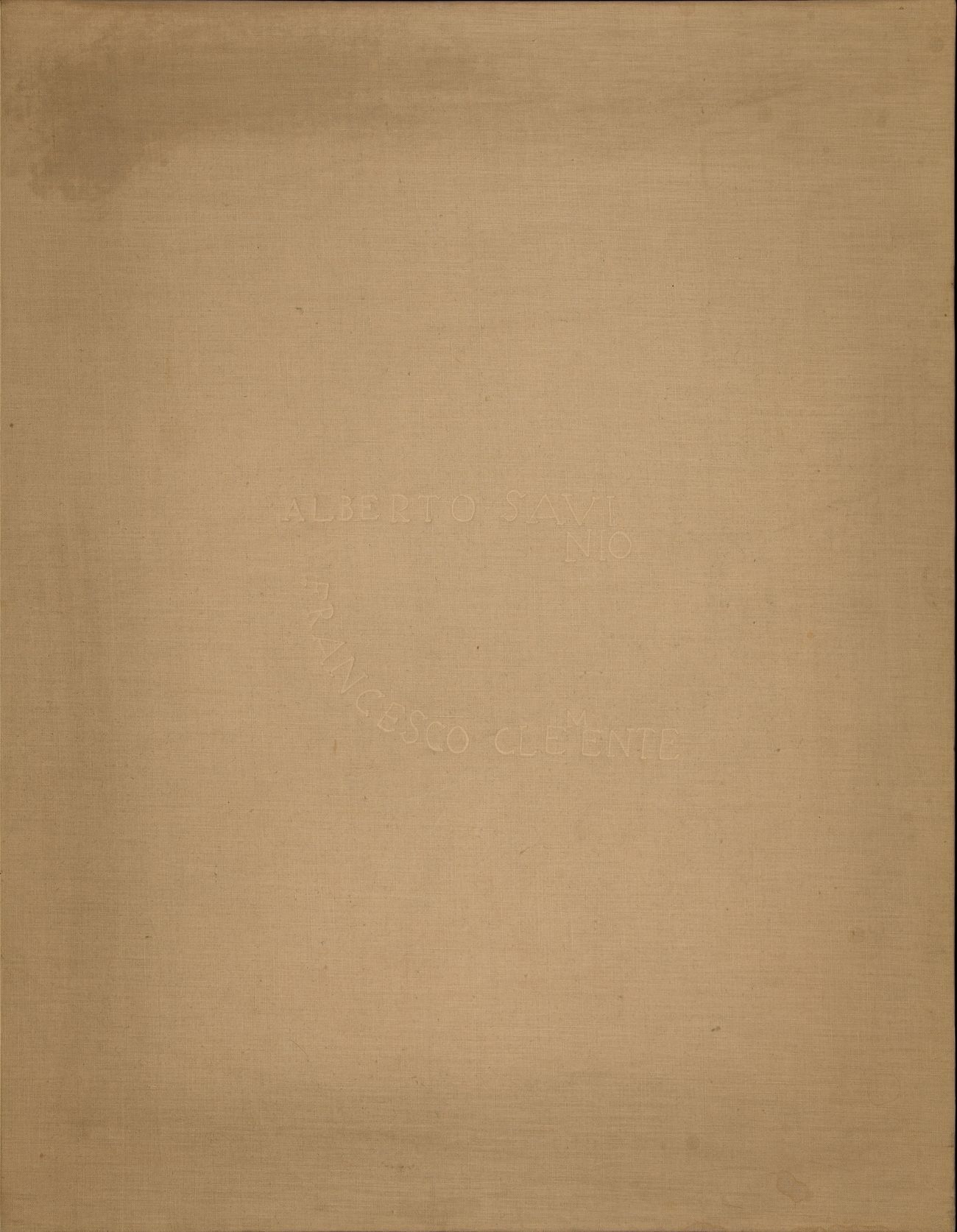
Alberto Savinio (Andrea de Chirico), Francesco Clemente, The Departure of the Argonaut, Petersburg Press, New York-London 1986
The Departure of the Argonaut, a luxurious folio published in 1986 by the Petersburg Press, contains the first English translation, by George Scrivani, of La partenza dell’argonauta by the painter, writer and musician Alberto Savinio (1891-1952).
Published in instalments in Italy and France over the course of 1917, the text, which recounts the author’s journey from Ferrara to the Macedonian front during World War I in diary form, alternates pages of vivid realism with moments in which poetic passion and dreamy visions prevail. The complete version of La partenza dell’argonauta appeared in 1918, inside the volume Hermaphrodito published by the Florentine Libreria della Voce. Scrivani’s translation is based on the new 1918 edition for the Supercoralli series published by Turin-based Einaudi.1
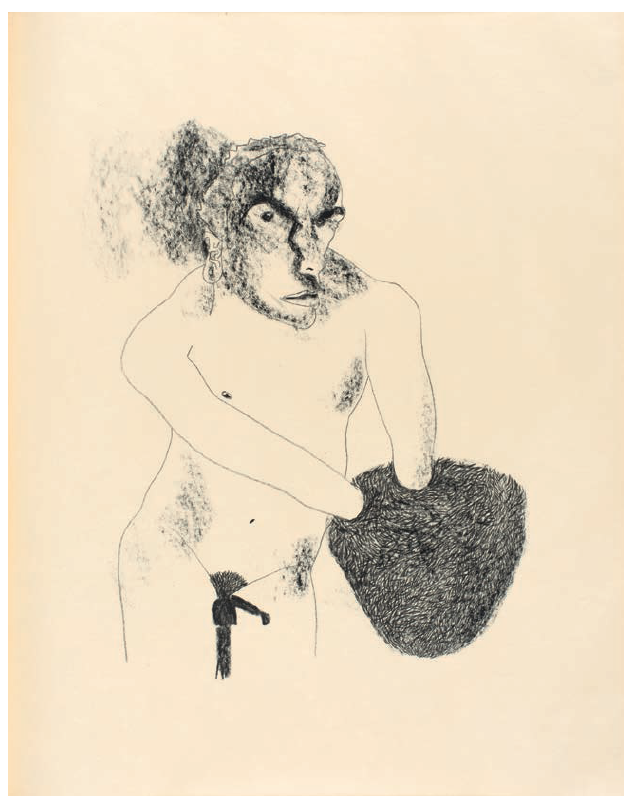
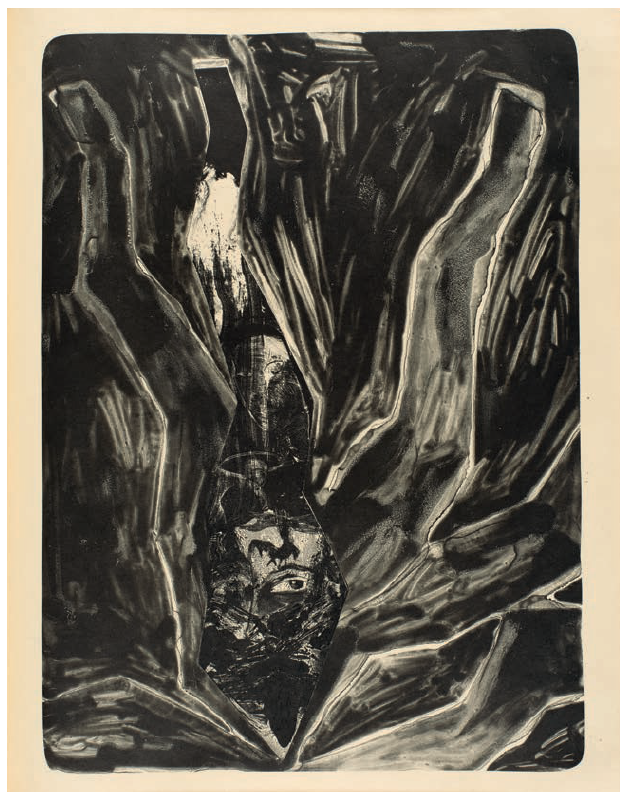
The book is enhanced by the fortyeight lithographs that the Italian artist Francesco Clemente (born in 1952), one of the protagonists of the Transavangardia movement, produced in New York, in alternating phases, between 1983 and 1986. Clemente did not conceive his lithographs as a mere figurative accompaniment to the narrative, but instead as a tribute to the older artist, whose work he had been reading with great interest for a decade, appreciating his versatility and ideas. The lithographs, which sometimes extend to cover the entire double page, incorporating the text, and at others reduced to limited portions of the sheet, are conceived as a hallucinatory crescendo, in which the technique is forced to the highest degree. The strokes obtained with the lithographic pencil are combined with others with strong painterly qualities, in which the tusche - a greasy and resinous ink for lithography - is applied in a more or less diluted form.
While Savinio’s pages feature passages in which the realism of the narrative prevails and others in the form of long emotional outbursts, in his drawings Clemente chooses to alternate seemingly abstract images with elements that preserve a certain degree of recognisability, echoing Savinio’s autobiography in the image of his self-portrait on more than one occasion. The two artists, like the legendary Argonauts who set out to reclaim the golden fleece, progress literally and metaphorically through time and space, accepting what they encounter on their way with a sense of wonder. The fact that the year of Savinio’s death coincided with that of the birth of his younger colleague, as picked up by the press the day after the public presentation of the lithographs, simply helps to emphasise the sensation that The Departure of the Argonaut represents a moment of transfer to and assimilation of the poetics of the former in the work of the latter.2 But the affinities go beyond coincidences and aesthetic matters. In fact, in 1976, after having watched one of the theatrical interpretations of Savinio’s text, Clemente met the lead actress Alba Primiceri, who soon became his muse and his wife. Therefore, for the artist, paying tribute to La partenza dell’argonauta meant celebrating a watershed moment in his life.3 The publication of The Departure of the Argonaut paved the way for Savinio’s American reception.4 This slow rediscovery was encouraged by the exhibition organised, alongside the publication of the book, by the Department of Prints and Illustrated Books at the Museum of Modern Art in New York.5 For the exhibition, the lithographed pages were spread out, with no interruptions, along the walls of the space and on the large angled display surfaces, emphasising the sense of the wonderful journey that the visionary nature of Savinio’s text and Clemente’s expressive images convey to the reader/spectator. The most recent public presentations of the lithographs include the exhibition at the Des Moines Art Center in 2015 and the one at the MADRE - Museo d’Arte Contemporanea Donna Regina in Naples in 2009, when preparatory studies, interpretative transparencies and lithographic stones were displayed for the first time.6
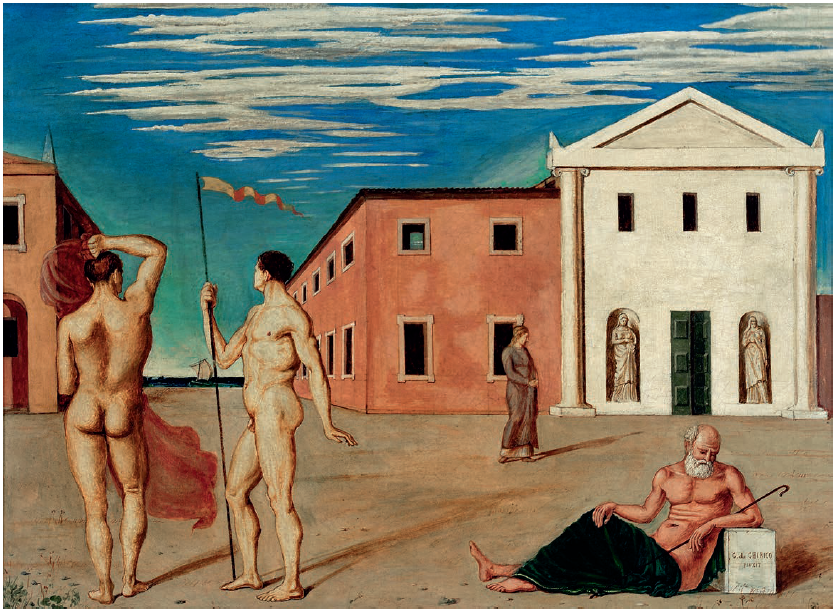
Fig. 1. Giorgio de Chirico, Il saluto degli Argonauti partenti (Argonauti II) The Farewell of the Departing Argonauts (Argonauts II)
As recalled by Annalisa Polesello Ferrari, who worked alongside Francesco Federico Cerruti for many years on the management of the collection, the acquisition of the volume from a private seller in the early 2000s compensated for the absence in the collection of a work by Clemente and made it possible to place his name alongside those of the other protagonists of the Transavangardia: Enzo Cucchi, Nicola De Maria and Mimmo Paladino (N. Cat. A89, A98, A149). The Departure of the Argonaut, moreover, could not fail to resonate in the presence of masterpieces by the de Chirico brothers that the accountant had collected over the years: the famous Il saluto degli Argonauti partenti by Giorgio de Chirico (1920, Fig. 1) and Fin d’un voyage by Savinio (1929, Fig. 2) put themselves forward as preferential counterpoints. Lastly, the theme of travel, which found a counterpoint in the corpus of 17thcentury atlases (Abraham Ortelius, Theatrum Orbis Terrarum - Parergon -Nomenclator Ptolemaicus), became enriched with the visionary nature of the poetic account with this new acquisition.
Fabio Cafagna
1 Savinio 1918, Id. 1981.
2 Spector 1987, p. 114.
3 A. N. Worthen, “Savinio & Clemente: The Departure of the Argonaut”, in Des Moines 2015, p. 6.
4 Regarding Savinio’s reception in the United States and the role of the volume examined here, see Salza 2019, https://www.italianmodernart.org/journal/ articles/alberto-savinio-and-francesco-clemente-dilettantes- among-symbols/.
5 Francesco Clemente: The Departure of the Argonaut, New York, The Museum of Modern Art, 6 November 1986 - 10 January 1987, R. Castleman (ed.), https://www. moma.org/calendar/exhibitions/3601.
6 Des Moines 2015; Naples 2009.
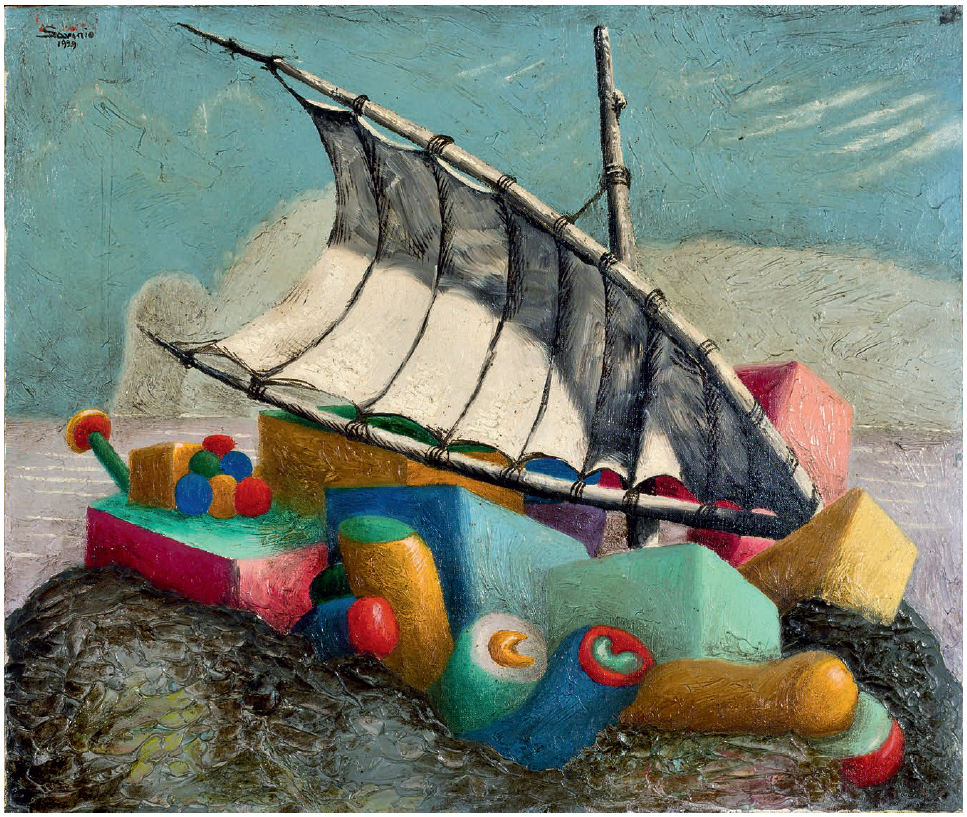
Fig. 2. Alberto Savinio (Andrea de Chirico), Fin d'un voyage